


The bell above the door rings softly on Cannon Street in Dover, and the first sensation is not sound but density. Shelves crowd the narrow room with glass, ceramics, scarves, framed paintings, jewellery cases, bears with stitched noses and solemn expressions, rabbits posed as if mid conversation. Light from the shop window filters along the length of the room and gathers on glass cabinets where silver and stones rest in quiet rows. The air carries the calm disorder of a place arranged by instinct rather than retail choreography.
For thirty five years Jenny Morgan has kept this small universe in motion.
“My name is Jenny Morgan,” she says, standing among the shelves she has assembled piece by piece since 1991. “I’m the proprietor of Curiosity of Dover Limited. I’ve been here thirty five plus years.”
The shop sits a short walk from the harbour and the ferries, from the constant traffic of lorries that line the roads leading toward the port. Dover, England’s old threshold, has always lived with movement. Empires sailed past the cliffs, armies embarked, tourists crossed the Channel, and cargo flowed through the docks. Yet on this street, behind a glass door and a modest sign, the pace of that history slows to conversation.
Morgan remembers the town differently.
“When I started,” she says, gesturing toward the shelves, “every big name was here. Dalton, Wedgwood, Moorcroft. Every single big company. And I had a tea room downstairs.”
The tea room no longer operates. The staircase remains. It leads to a quiet space below the shop floor where once visitors drank tea beneath the hum of a town that felt prosperous and confident.
“It was hectic,” she says, with a smile that carries both pride and a little disbelief. “It was fun. Beautiful people. The tunnel was just being completed, there was lots of money in the town. Every shop was open.”
The Channel Tunnel altered the geography of Dover in ways that were not immediately obvious. Freight routes shifted. Factories that once anchored employment moved abroad. Manufacturing, once visible in the town’s daily rhythm, thinned out.
“We had car factories, box factories, toy factories, rubber factories, brass factories,” Morgan says. “Plenty of work for everybody. Then the tunnel opens and things can be made cheaply abroad.”
The transformation arrived quietly. One shop closed. Then another. Customers changed their habits. The town adjusted, sometimes reluctantly, sometimes without noticing.
“Change happens slowly,” she says. “So slowly you don’t realise it’s happening.”
The shop evolved with the town. The porcelain brands faded from the shelves as companies closed or moved production elsewhere. In their place came something different, something more personal.
Morgan began filling the walls with work by local artists.
Paintings now line the walls, from delicate watercolours of birds to expressive canvases painted in response to grief or recovery. Wooden ornaments carved by two sisters from Dover sit on shelves beside glass made in England and scarves woven in Scotland. A jeweller from London supplies silver pieces set with pearls and stones.
“I love talented people,” she says. “Especially young people. So I give them my walls.”
She moves easily through the shop, naming artists, telling the story behind each piece. A painting created by a woman who turned to art during a painful chapter of her life. Jewellery crafted by a maker whose work travels the world but who still visits Dover. Handmade bears stitched by specialist artisans.
On one shelf sits a collection of rabbits, delicate and slightly solemn, their paws made from soft suede and their eyes glass.
“They’re not toys,” Morgan explains. “They’re meant to sit somewhere safe until a child is older.”
The rabbits were created by the teddy bear artist Jill Dawson1, who died in a car accident two Christmases ago. Each piece is unique. There will be no more.
“This one is the only one,” Morgan says, lifting a tag that lists its materials. “Mohair, glass eyes, steel shot.”
Collectors know their value. The price reflects the rarity. Yet Morgan speaks of them less as commodities than as fragments of a life interrupted.
The shop’s glass cabinets contain another kind of history. Jewellery arranged beside watches and perfume bottles, their surfaces reflecting the fluorescent light overhead. Beyond them, rows of vintage teddy bears rest behind glass, pre loved, as Morgan puts it, though carefully inspected before they reach the shelves.
The floor is narrow enough that two people passing must step aside slightly. Customers sometimes linger longer than they intend.
Morgan encourages it.
“If someone comes in and they haven’t spoken to anybody for two days,” she says, “they can sit down and talk.”
The conversation moves naturally toward the subject that occupies many small shopkeepers across Britain.
Shopping online.
“People wonder why shops are closing,” Morgan says. “But they buy everything online.”
The shift accelerated sharply after 2020, when pandemic restrictions drove millions toward digital retail. The change, she believes, reshaped the relationship between suppliers and shops.
“The suppliers go straight to the customer now,” she says. “They don’t even need shops anymore.”
The economics are simple enough. Manufacturers sell directly online. Warehouses replace storefronts. Labour is reduced. Prices appear competitive.
Yet Morgan sees another cost, one that does not appear on balance sheets.
“Shopping isn’t just buying something,” she says. “It’s socialising. It’s learning to speak to one another.”
She pauses beside the counter.
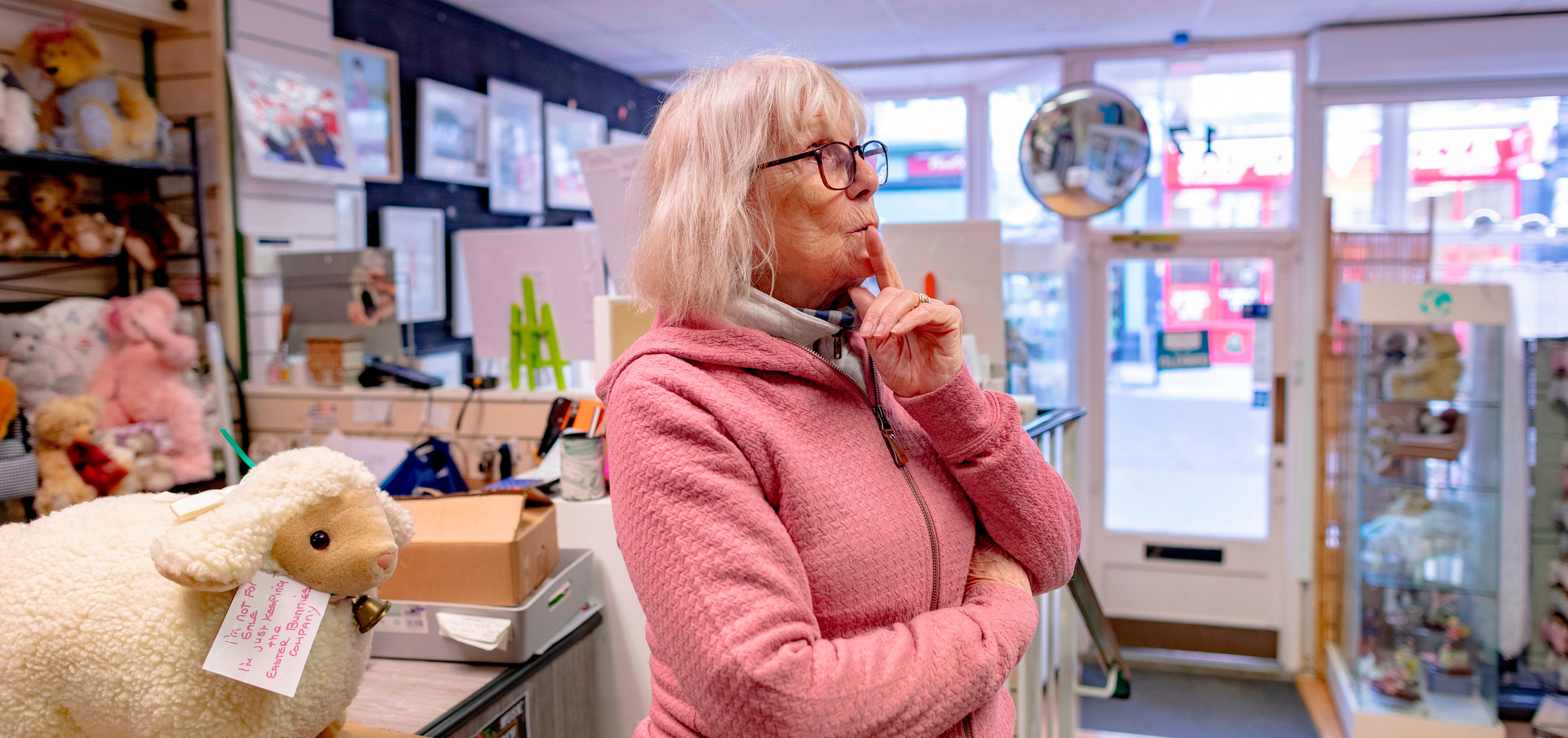
“If you remove that, something breaks.”
Morgan once trained retail staff through the Co operative system. The lesson she remembers most clearly concerns the simplest interaction.
“You say hello,” she explains. “You tell the customer if they need you, you’re there. That’s all.”
In her view, the erosion of small shops erodes the subtle etiquette that binds strangers into a community. She bristles at casual forms of address she hears increasingly in shops.
“I go into places now and they call me lovey,” she says. “I’m not your lovey.”
The irritation carries humour, but also a deeper concern about how quickly language, and the attention behind it, can fade.
“If people don’t talk to each other,” she says, “they get isolated.”
Isolation, she believes, is one of the quiet dangers of the digital age.
“They think the phone is a friend,” she says. “But it’s not.”
Her own habits remain deliberately analogue. She keeps paper records. She resists internet banking.
“I want a paper trail,” she says.
The irony is not lost on her. Journalists walk into the shop carrying cameras and recording devices, using the digital tools she distrusts to preserve the story she tells.
Morgan laughs at the contradiction.
“That’s your world,” she says. “You’ve got to tell people.”
Outside the shop window Dover continues its complicated conversation with the world. Television cameras often appear near the harbour when migrant boats cross the Channel. News crews arrive for stories about border queues, ferry delays, political disputes.
Morgan believes the town’s reputation has been shaped too heavily by those narratives.
“The media talk about immigration, about the port, about the roads being blocked,” she says. “But they never talk about how nice the people are.”
She recalls a moment years ago in Sri Lanka, riding in a tuk tuk when a driver asked where she was from. When she answered Kent, the man nodded.
“The White Cliffs,” he said.
Dover, even far from its shores, still carries the symbolic weight of the country’s coastline.
Yet symbolism rarely reflects daily life. The high street tells a more complicated story. Some shops have closed. Others have opened under new ownership. Hairdressers and nail salons appear in former retail spaces. Immigrant entrepreneurs run grocery stores and cafes.
Morgan views the change with a mixture of realism and defiance.
“People say foreigners are buying the shops,” she says. “But why didn’t you buy them?”
The answer, she suggests, is simple.
“No English person wanted them.”
Nearby, a Portuguese woman named Sandra runs a cafe where locals gather for conversation and events. Morgan admires her determination.
“She likes people,” Morgan says. “That’s the secret.”
For Morgan the shop has become less a business than a continuation of her life.
“If I was starting now, I would close,” she says. “But I’m not starting.”
She stays because she chooses to stay.
“When I go,” she says, “it will be because I want to go.”
The shop remains busiest at Christmas, when tourists and residents alike search for gifts among the shelves. Summer brings another rise in visitors as ferry traffic increases and travellers wander into town.
But even on quiet days the shop rarely feels empty. Paintings hang above the slat walls. Bears watch patiently from glass cabinets. Handmade rabbits rest on their artificial patch of green grass.
And Morgan remains behind the counter, ready to greet whoever walks through the door.
In Dover, where ferries depart hourly and the horizon rarely sits still, Curiosity of Dover offers something slower and more enduring.
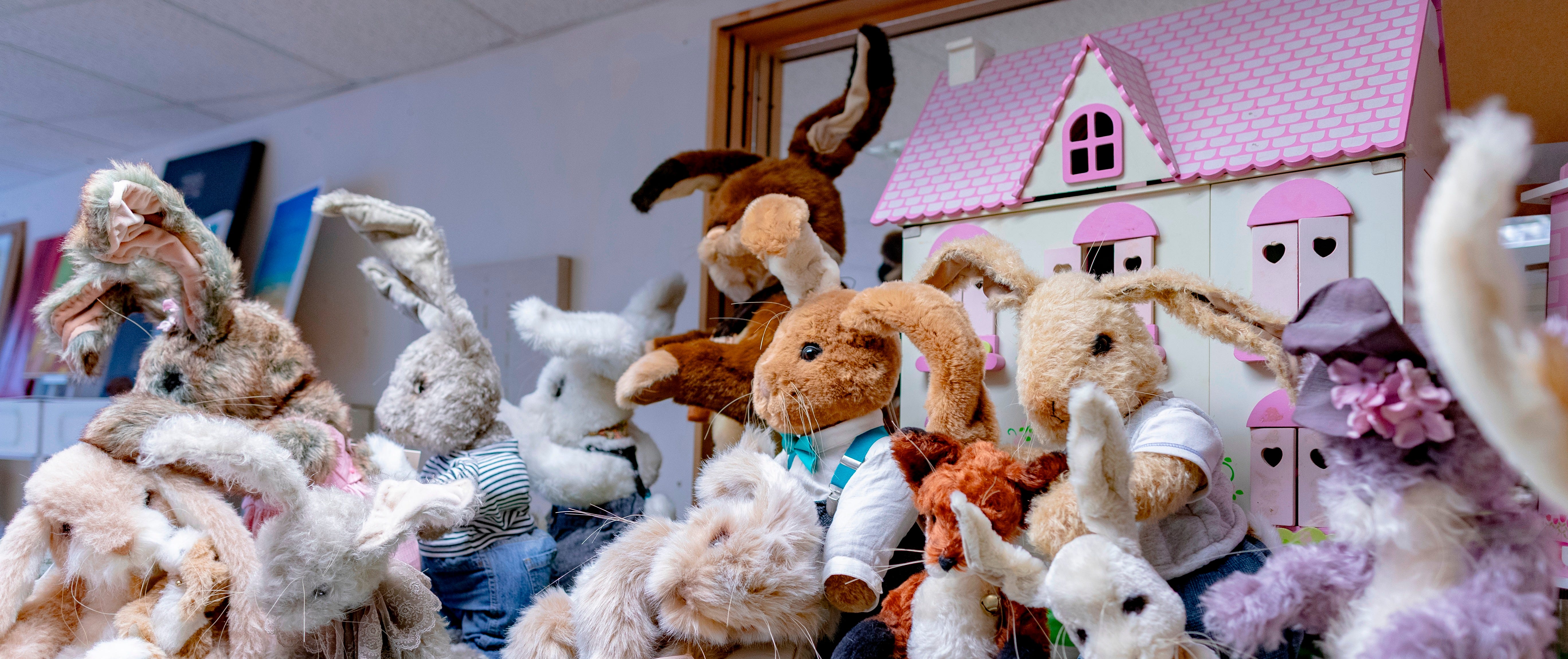
A room full of objects, certainly. But also a room where a stranger might sit for a while, talk about the town, and leave feeling that the place still holds its people together.
Step back out into the Dover sunlight and the town reveals itself differently. The sea glints beyond the rooftops, gulls wheel over the harbour, and along the streets people drift between cafés, galleries and small shops that refuse to surrender their charm. The White Cliffs still stand watch above it all, not as symbols of worry but of endurance. In places like Jenny Morgan's shop, in the laughter that spills from a café table, in the quiet pride of artists hanging their work on local walls, Dover shows its truest character. This is not a town defined by headlines about crossings or queues at the port. It is a town of neighbours greeting one another, of afternoon walks beside the Channel, of tea cups clinking in warm rooms and sunlight stretching across the promenade. Come on a clear day and wander without hurry. You may find yourself stepping into a shop like Curiosity of Dover, where Jenny might look up with a smile that says the kettle is never far away and conversation is always welcome. And somewhere between the cliffs, the sea breeze and the laughter of strangers becoming friends, Dover will do what it has done for centuries. It will quietly win you over.
Jill Dobson was described by Jenny Morgan, proprietor of Curiosity of Dover, as a teddy bear maker whose handmade rabbits and bears were sold through specialist fairs, including the Kensington Bear Show in London. Morgan said the pieces on display are among the last of Dobson's work.

